

by Phil Lempert, Special Contributor
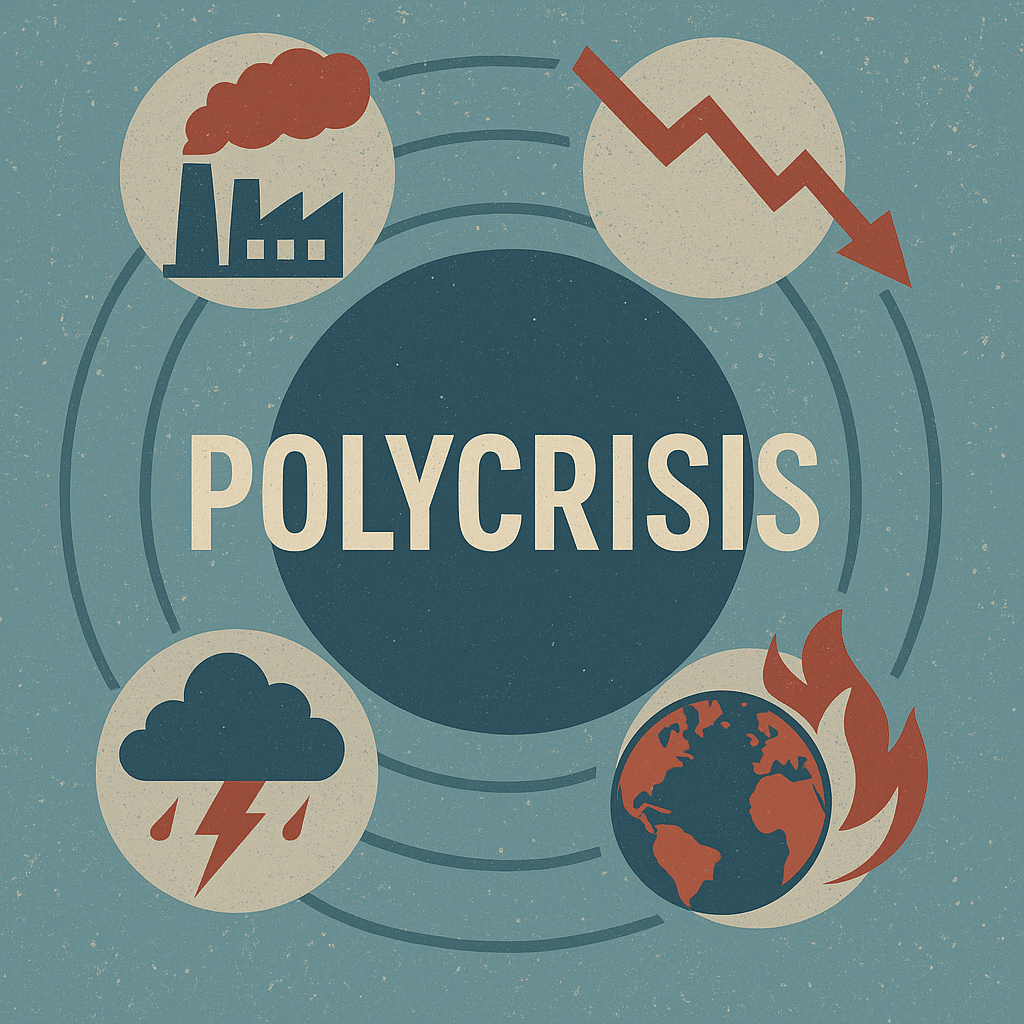
We’ve seen economic downturns before. We’ve weathered supply chain disruptions. We’ve watched geopolitical tensions shift consumer behavior. But what we’re witnessing now is fundamentally different: a convergence of crises happening simultaneously, creating what economists call a “polycrisis” – and it’s reshaping the American shopper in ways that demand immediate attention from every retailer and brand in the food industry.
Inflation may have slightly cooled from its 2022 peaks, but shoppers haven’t forgotten. Climate-driven crop failures are impacting everything from olive oil to coffee prices. Geopolitical uncertainties continue to threaten supply chains. And shoppers? They’re exhibiting a pattern of behaviors that researchers have been documenting across multiple studies – what is being called the “Polycrisis Shopper.” This consumer is hyperaware, deeply skeptical, and ready to pivot at a moment’s notice.
Here’s what food retailers need to understand: this isn’t about waiting for things to “return to normal.” There is no normal anymore. This is the new normal. Research from Innova Market Insights, Deloitte, McKinsey, and Ipsos all point to the same conclusion: consumers have fundamentally rewired their relationship with food shopping in response to overlapping crises. What I’m synthesizing here as the Polycrisis Shopper represents a convergence of behaviors documented across these studies – and these changes are sticky.
These shoppers are exhibiting behaviors we’ve never seen at this scale:
Radical Brand Promiscuity. Brand loyalty, already eroding, has essentially evaporated for a significant segment of shoppers. They’re comparing prices across multiple grocery apps before leaving the house. They’re splitting shopping trips between discount chains, club stores, dollar stores and traditional supermarkets. Recent research shows that 70 percent of consumers have experimented with private labels, with many, especially the food-focused Millennials and Gen Z, making this a permanent shift rather than a temporary measure. According to McKinsey, more than 80 percent of U.S. consumers now rate the quality of private-brand food products the same or better than national brands.
Climate-Conscious Pragmatism. The Polycrisis Shopper wants to make sustainable choices, but they’re doing the math. They’re weighing the environmental impact of their avocado against its $3 price tag and the fuel cost to get to the store that sells it for $2. This isn’t hypocrisy – it’s the reality of trying to be a conscientious consumer while managing a household budget that’s already stretched thin. Research indicates that 58 percent of consumers globally are willing to pay more for eco-friendly products, but economic pressures are forcing difficult trade-offs.
Apocalypse Pantry Meets Just-in-Time. These shoppers are simultaneously stockpiling non-perishables when prices drop while buying fresh items in smaller quantities to avoid waste. They remember those empty shelves during COVID and are afraid it could happen again because of tariffs. They’re watching climate disasters disrupt supply chains in real-time. These shoppers are hedging their bets, and food retailers need to accommodate both behaviors.
The traditional playbook won’t cut it anymore. Supermarkets need to fundamentally rethink their operations with agility as the core principle.
Dynamic Pricing and Transparency. Polycrisis Shoppers expect real-time responsiveness. When wholesale costs drop, they want to see it reflected on shelves immediately – and they’re checking competitor apps to verify you’re being fair. Retailers are using digital electronic shelf labels (ESLs) that can adjust multiple times per day. While these retailers suggest that they will only use the technology to benefit consumers, many are skeptical – including including Senators Elizabeth Warren and Bob Casey. These shoppers respect transparency.
Flexible Private Label Strategies. You need premium private label for the shopper stretching their budget on organic staples, value private label for the price-conscious purchase, and everything in between. You need to be on top of the latest (fast moving) trends and be ready to expand or contract each tier based on real-time demand signals, as exhibited by Kroger’s introduction of its new GLP-1 friendly Simple Truth Protein store brand.
Private label sales hit a record $271 billion in 2024, growing 3.9 percent compared to just 1 percent growth for national brands. One out of every four grocery products purchased in the U.S. is now a private label brand. This is a fundamental market shift.
Localization at Scale. The Polycrisis Shopper values local sourcing. Smart retailers are building regional supply relationships that can flex based on climate events, transportation costs, and local crop yields. This isn’t just about the “local” halo effect anymore; it’s about creating supply chain resilience that shoppers can see and appreciate. When California lettuce is $4 a head due to drought, can you pivot to greenhouse-grown local lettuce at $3? That’s the kind of agility that builds trust with shoppers.
Climate impacts on agriculture are becoming more severe, with cocoa prices hitting $13,000 per ton in December 2024 – a 400 percent increase over the past decade. Extreme weather events continue to disrupt crops globally, from droughts affecting coffee production in Brazil to floods and diseases devastating citrus crops in Spain, Brazil, Arizona and Florida.
The Brand Imperative. Brands are under even more pressure. The Polycrisis Shopper will abandon you in a heartbeat if a competitor offers better value or proves more trustworthy. Here’s what you need to do:
Right-Size Everything. Package sizing needs to match the moment. Smaller households, reduced budgets, and waste concerns mean your 32-ounce jar of salsa might not meet your shoppers needs, a 16-ounce fresh salsa in the dairy case might be a better fit. You also need larger, value-oriented multipacks for shoppers in stockpiling mode. But don’t attempt to hide what you’re doing – that’s “shrinkflation.” Shoppers will notice and “reward” your efforts by switching to another, more transparent brand. The Polycrisis Shopper understands supply and demand because they’re living it. What they don’t tolerate is shrinkflation without explanation or price increases that feel opportunistic. Patagonia’s approach in apparel – explaining exactly why costs changed – is a model food brands should study.
Consumer research shows that 66% of shoppers have cut back on non-essentials, while 55 percent of consumers say they’re tightening their budgets due to current economic conditions. According to Circana data, consumers are making more frequent trips (up 8.7 percent) but buying 11 percent fewer items per trip.
The Bottom Line
The Polycrisis Shopper isn’t a temporary phenomenon waiting to be educated back to their old habits. This is the new baseline. Economic uncertainty, climate impacts, and geopolitical instability aren’t going away – and consumers have adapted accordingly.
McKinsey’s State of Consumer research found that behaviors adopted during COVID-19 – digital connectivity, at-home activities, changed shopping patterns – are now permanent parts of daily life. Deloitte’s ConsumerSignals research confirms we’re operating in a “polycrisis world” that requires always-on adaptation.
The food retail industry has always prided itself on resilience and adaptation. Now we’re being tested like never before. The winners will be those who match shopper agility with operational agility, who build trust through radical transparency, and who acknowledge the reality their customers are living rather than the one we wish existed.
This isn’t the time for business as usual. The Polycrisis Shopper has already moved on. The question is: Have you?
Phil Lempert, known as The Supermarket Guru, is a food industry analyst, trends forecaster, and consumer advocate. His commentary on food retail and consumer behavior has appeared in major media outlets for more than three decades and he now proudly joins Food Trade News as a monthly contributor.


