

By Zachary Zawila, Special Contributor
Closed Walgreens and Rite Aid locations are getting a new life as small-format grocery stores, solving the tricky problem of real estate availability in the crowded Northeast markets.
The Rite Aid company’s bankruptcy in late 2025 closed hundreds of stores, while at the same time CVS and Walgreens are restructuring and dumping hundreds of their own locations. All told, over 1,000 store sites are entering the real estate market – many for the first time in years.
The big winners from these closures are independent grocers – often in urban areas where available real estate is limited, or in small towns with few grocery options. In fact, more than 30 former chain drugstore buildings in the northeast have reopened or will reopen as independent supermarkets since 2020.
From Harrisburg, PA, where an Associated Supermarket will fill a former Rite Aid, to Boston, MA, where local chain Vicente’s is preparing a new location in a former Walgreens, local supermarket operators have revitalized these locations.
In small towns, repurposing closed pharmacies as supermarkets is helping reduce food deserts. Penns Grove, New Jersey is located just across the Delaware River from Wilmington.
Breathing New Life Into Stores – And Towns
The community of just under 5,000 has been without a supermarket since 2021 when Incollingo’s, the independent in town, closed and was demolished for a Wawa. Now, a former Rite Aid just across the street is set to become a new independent supermarket.
The 12,000 square foot space would be far too small for a big chain store like ShopRite or ACME, which has a location about five miles outside of Penns Grove. But it’s just right for a small-town independent grocer.
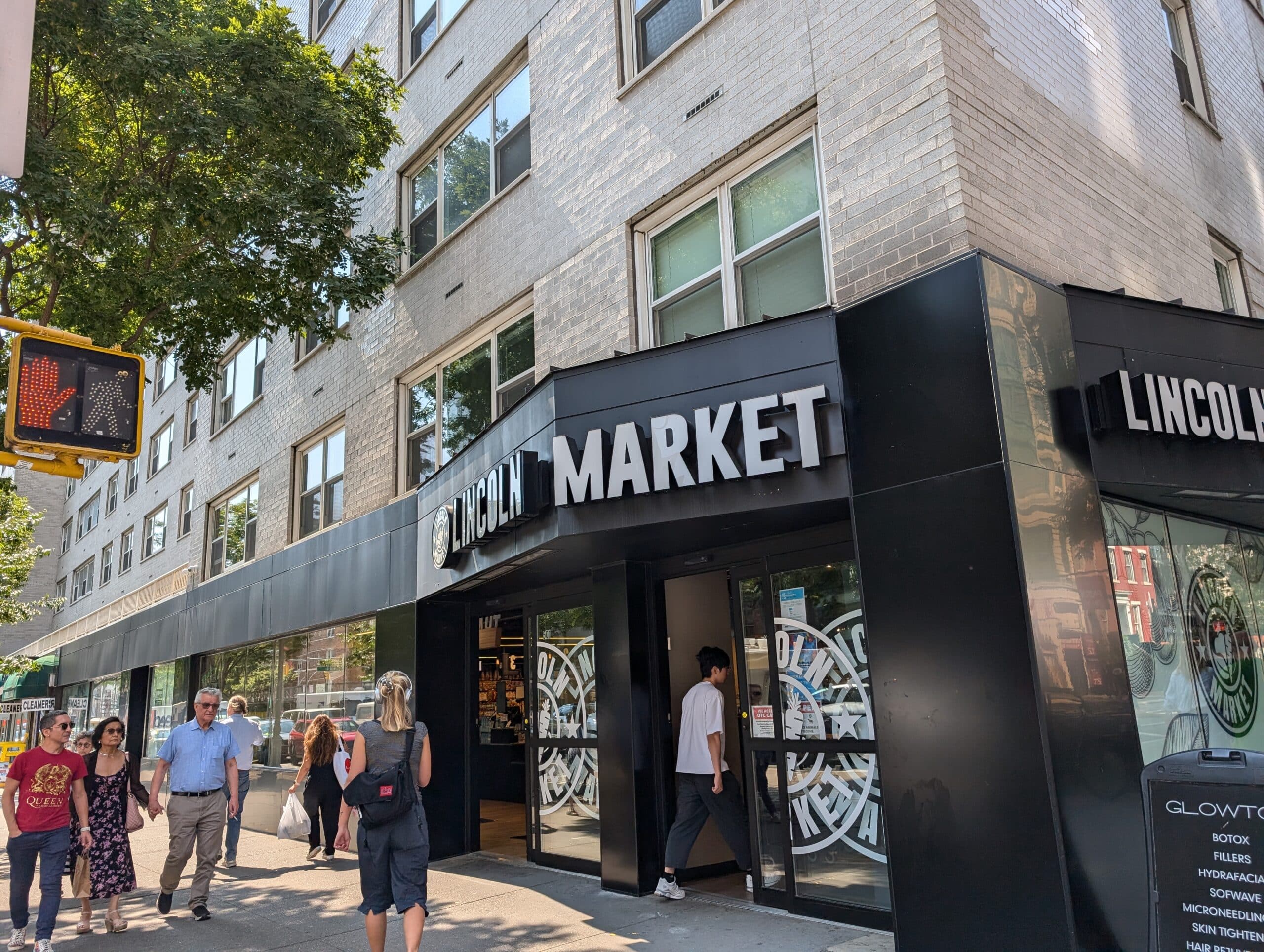
In crowded urban locations, former drugstores are a good way for operators to enter new neighborhoods. Bustling Sixth Avenue in Manhattan’s Greenwich Village might be completely different from Penns Grove, but there, too, a former Rite Aid has become an independent supermarket. Local chain Lincoln Market opened in the summer of 2024 there, taking up around 12,000 square feet, around the same size as Penns Grove.
Six blocks south, a former Duane Reade has been reimagined as Tashkent Supermarket, Manhattan’s only Uzbek grocer. The prepared foods-heavy specialty market benefits from the significant foot traffic of the store, which is located at a subway stop.
It’s only 5,000 square feet at ground level, but still one of the larger grocers in the neighborhood.
Big chains have found opportunity in these drugstore spaces, too – but only when they’re willing to be flexible in format. In fact, two of Whole Foods’ four new small-format Daily Shop locations are located in closed drugstores. LIDL’s new store on Manhattan’s Lower East Side is a former Rite Aid, though it’s smaller than the average LIDL.
It’s no surprise that these buildings lend themselves well to supermarkets: many of these drugstores were, in fact, built as supermarkets. That LIDL was built in 1976 as an A&P, with Rite Aid claiming the building decades later. The Harrisburg location also started as an A&P, built in 1960.
Another Evolution For Small Storefronts
The rapidly changing grocery market is rewriting the rules for big vs small store sizes. As big-chain grocers sought larger, modern locations, the smaller stores under 20,000 square feet became obsolete to operators like A&P, but the perfect size for drugstores like Rite Aid and CVS.
Now, as smaller supermarkets thrive, the buildings can be converted back to grocery stores. Many now-closed drugstores were centrally located in a town or neighborhood, allowing a nimble grocer to get into a core location where a store upwards of 60,000 square feet simply wouldn’t be possible.
Out in East Flatbush, Brooklyn, a new America’s Food Basket location has opened up in a former Rite Aid, taking up a little over 10,000 square feet. That’s certainly not a large store, but a longtime Associated across the street is about half that size.
In some urban areas, where space is often at a premium, a former drugstore turned grocery might actually be larger than the other area supermarkets.
Closed Rite Aid and Walgreens stores don’t always make for good supermarkets. In suburban areas with more space and more competition, these spaces have remained vacant or transformed into new businesses other than grocery stores.
Only a handful of closed suburban drugstores have become supermarkets, and those that have are specialized – for example, international or discount markets. However, with Amazon/Whole Foods Market Daily Shops trying out new smaller formats, and Aldi and Trader Joe’s already showcasing their efficiencies, smaller stores may become popular once again.


