

by Food Trade News/Food World
Four Seasons doesn’t “read” like a typical wholesaler — and that’s the point. What began as a small, family-run produce operation has evolved into a multi-pronged supply chain platform serving independents up and down the East Coast, with organics, imports, and logistics now central to the mix.
The growth has been impressive, but there’s a throughline of discipline, culture-first leadership, and a willingness to expand without losing the core.
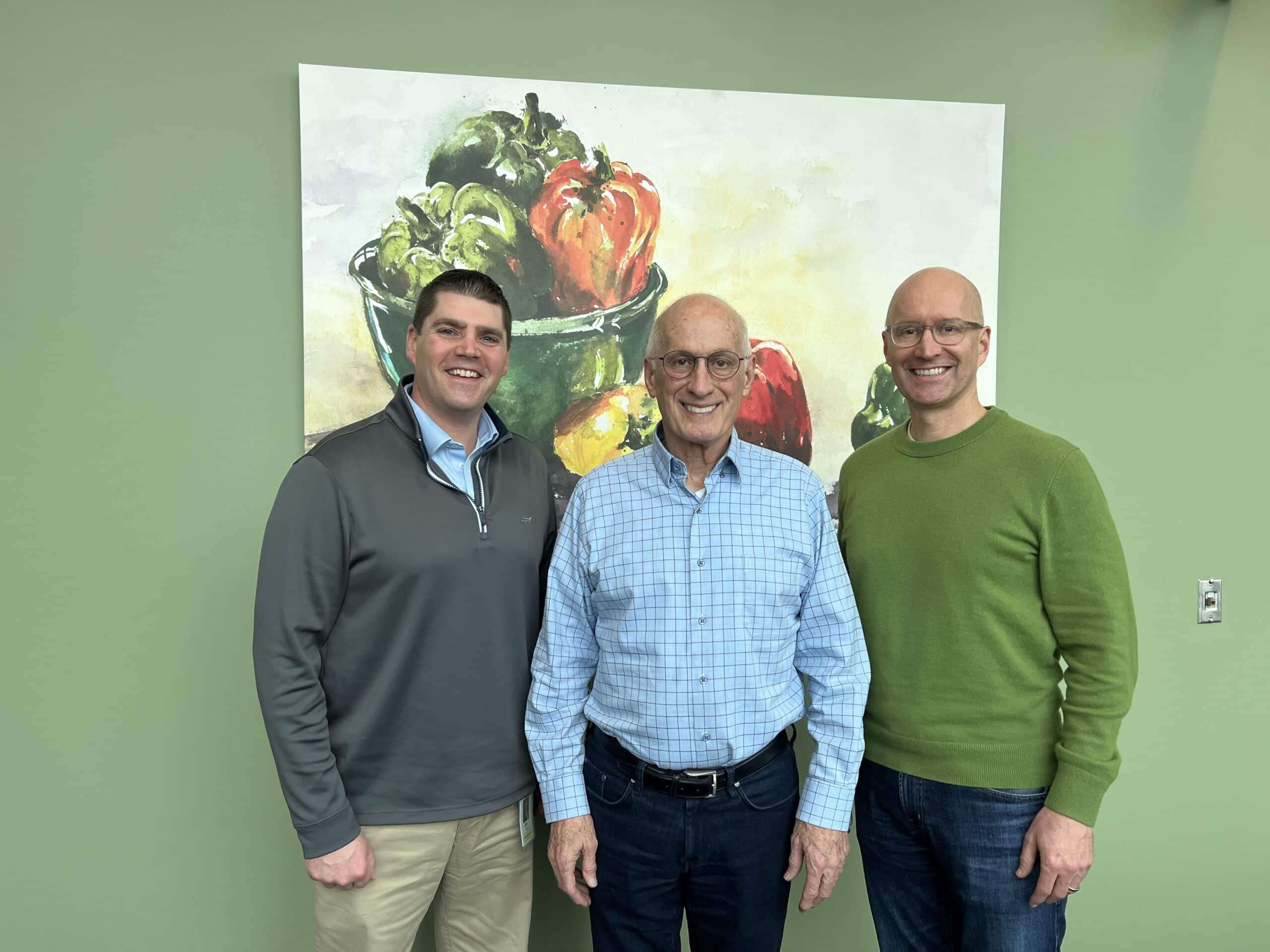
In the conversation that follows, Jason and David Hollinger and John Steffy walk through how that balance actually gets managed.
They’ll give us a look at how a 5,000-square-foot warehouse becomes a 400,000-square-foot operation, how organics moved from a special niche to account half the business, and how independents remain at the center of the strategy.
Of course we’ll also get to understand what sits underneath the numbers: a culture built intentionally over decades, a leadership bench developed from within, and a model that continues to evolve as it delivers success.
In this wide-ranging, insight-packed interview, the Four Seasons team shows us exactly what makes their operation different…
FW/FTN: Jason, can you describe your early memories of working with your father and other Four Seasons executives?
Jason Hollinger: I loved coming in the office and the warehouse as a kid observing the activity. I worked part-time in high school doing various jobs including selecting and receiving. Looking back, I feel fortunate that our CEO at that time – Ron Carkoski – probably gave me more responsibility than I should have had. After college, I joined Four Seasons full-time, first as a buyer. And thanks to my father and Ron, they allowed me to explore our organic opportunities which at the time represented about five percent of our total business. I really enjoyed that role and stayed there for seven years. Those were fun early years and a good place for me to learn the business. Today organics represent about 50 percent of our sales.

David Hollinger: Jason is being a bit modest, so I think a little more background would be helpful. During his summers in high school, he did a lot of different things here at Four Seasons as he explained. He also spent one summer working at Fresh Fields (now Whole Foods Market) to better understand the retail experience.
Before Ron Carkoski was promoted to CEO, he was head buyer and for a while held both positions. It became clear that it wasn’t practical for him to do both jobs so we found a head buyer who didn’t work out. In fact, we hired several people who we ultimately determined didn’t fit our culture. Ron and I used to go away once a year for about four days on kind of an executive retreat just to talk about the business. We were frustrated that we couldn’t find the person we needed to fill the head buyer position. We both wondered if Jason was ready – I didn’t want to push Ron because he was my son – but Ron agreed that Jason should be offered the opportunity.
Jason Hollinger: I remember that very clearly – it was January 2010.
David Hollinger: The next progression was from head buyer to general manager and the process was similar. That was in 2013 and we both thought that Jason was ready, but our process, as is the norm at Four Seasons, was very measured. I believe those years as general manager helped build Jason’s confidence and prepared him for the CEO role. Jason was named president in 2018 and Ron retired the next year (Ron Carkoski passed away in 2023).
Jason Hollinger: I’m so grateful for Ron and learned so much from him, especially his people skills. Succession planning has always been very important and Ron announced his retirement date in 2017. That gave me ample time to think and process what I needed to do. A clear retirement date for a key leader is a gift.
I believe one of the most important components in our success has been good leadership succession. When my dad promoted Ron to be the CEO, he went to our executive meeting in the main conference room and announced, ‘I’m promoting Ron to be the president and CEO of our company, and this is going to be the last executive meeting I’ll attend.’ Shortly thereafter, he walked out of the room and never went back into that meeting.
He didn’t micromanage Ron, he let him lead. And furthermore, he moved his office out of our main building to our second building, Warehouse Two so that Ron would be viewed as the leader. And that’s a story that reverberates throughout our organization and is foundational to others and led to other well-executed successions.
David Hollinger: What was interesting about our dynamic was that I was from a conservative Mennonite background – we didn’t drink a lot and used clean language. And Ron was a Catholic from Green Bay, WI. We were so different, but we got along so well. Over time, Ron became a friend, a confidant, and a great employee. Ron’s influence allowed me to think differently about aspects of the business and my life – I relaxed some of my ideas, I still have that Mennonite heritage but he definitely broadened my views and certainly livened me up. Ron brought an incredible gift that he brought to all of us here, family, business and everybody.
FW/FTN: Jon Steffy, how did it all begin for you at Four Seasons, and tell us how your career has progressed here?
Jon Steffy: I started in my senior year of college as an intern in 2000. I grew up in the area, and I’d actually worked on a farm where some of the produce that we grew was actually purchased by Four Seasons via a local auction. It was only a three-month internship and then I graduated. In fact, I had another job offer from a company in Philadelphia that I had interned for the prior summer and I just kind of on a whim mentioned to the gentleman that was guiding my internship – he was the operations manager at the time – ‘Hey, would there be anything full-time here? I’d love to stay in Lancaster County.’ And he said, “Well, let me think and let me see.” Literally, a couple of days later Four Seasons made me an offer and I accepted it. And I’ve been here ever since.
FW/FTN: I know one of your mentors was Wendell Hahn (Four Seasons’ long-time VP of business development who retired in 2017).
Jon Steffy: Wendell was great to work for and taught me so much. Because I was a recent college grad and knew a little bit more about technology than the guys writing stuff down and faxing things, they put me in pricing. Back then, Four Seasons was working as (wholesale grocer) Fleming Cos.’ produce supplier in this region. My role was to help their retail customers – mostly Shop ‘N Bag and Thriftway independent stores – with their weekly ads and order guides. I did that all under Wendell’s leadership and guidance. I also did all the computer stuff, and then I would go along with Wendell and others to these meetings with these Philadelphia retailers as a young man in my early 20s. And that’s how I really learned retail – listening to these guys argue about pricing and strategy and ads and quality.
I never forget those early days as great street-level learning experiences. I worked in pricing and account management for quite a while, maybe eight years. While I had that same title that whole time, I felt like I was getting a promotion because of these experiences I was absorbing.
FW/FTN: When did you move into sales leadership?
Jon Steffy: In the late 2000s, when I was promoted to sales manager and then later to director of sales. At the time when I was director of sales, Jason was director of procurement – we worked well together and also had lot of fun at that time. When Jason moved up from GM to president and CEO, I was invited to be the general manager of Four Seasons. That was in 2018.
Jason Hollinger: We were peers there for some years. And those were good years. We had both been working in sales in buying and now we are both the leaders of those areas.
FW/FTN: David, in the past you’ve told me how one retailer – Murray Battleman – who owned the Shop ‘N Bag store in Richboro, PA and was part of a larger buying group – was instrumental in helping Four Seasons grow in the early years. Can you enlighten our readers with that story?
David Hollinger: In those early days, we were working out of a 5,000 square foot warehouse and we were primarily selling to restaurants and small corner grocery stores, along with a few medium-sized independents. And we knew this broker from the old Philadelphia Produce Market, Stan Bloom. He got us to buy potatoes and onions on a direct basis. He introduced me to his nephew, Murray Battleman, who was the CEO of six Shop ‘N Bag stores (Davisville Group).
Our new warehouse (25,000 square feet) was already under construction and before he left, Murray said, ‘“When you get that new building done, I’ll come back and we’ll talk.’ When the new warehouse was completed, Murray came back and we made a deal – we got those six stores. And we got 100 percent of the business for all six stores.
Our goal back then was to prove to Murray and other independent owners that they could buy all their produce from us instead of shopping at other wholesalers. We proved to them that we could make their businesses better. Thank God for those six stores – that was a big win. They help propel us to develope more retail store business
FW/FTN: Could you break down all facets of the total business?
Jason Hollinger: The majority of our business is still to serve as a produce wholesaler. We primarily serve independent retailers. Those independents stretch from Maine to North Carolina, and west to Tennessee. But the majority of them– are located in the I-95 corridor from DC to New York. That’s Four Seasons produce, our legacy business which still comprises the largest part of our entire business.
Approximately 20 years ago, Dan and Ron started other businesses including a small import company named Earth Source that Jon also leads. We import Argentine lemons, Mexican limes and some Chilean fruit. Earth Source works with chain stores primarily other wholesalers, including Four Seasons. Our other business is Sunrise Logistics. And that business offers storage and freight services to other produce companies, mostly growers, shippers or food producers who are looking to get their products to their customers, and we help them do that. We focus on produce and other perishable products. There’s a lot of capable 3PLs (third-party logistics) firms out. But we know produce and specialize in linking together fresh produce 3PL solutions. All those three businesses work in this facility in Ephrata. We have two distribution centers that encompass about 400,000 square feet, and the labor for all those is shared.
Our labor force of about 900 people may be loading a truck for Earth Source, loading trucks for Four Seasons and loading a truck for Sunrise Logistics. Almost all of the outbound freight for all those businesses is on our own fleet called Sunrise Transport. Our drivers have a great reputation for being friendly, helpful and capable drivers – they make deliveries to those independent stores with a smile. And so those are our four companies that comprise our whole organization.
FW/FTN: How many shifts?
Jason Hollinger: We work over 24 hours, six-and a-half days a week. We’re generally running two shifts that cover 24 hours. Our day shift consists of our office team and the warehouse handles receiving, while our night shift primarily focuses on shipping. We run two shifts in packing operations as well.
Jon Steffy: Our fleet consists of about 120 trucks, most of which are tractor-trailers, but we also own and operate some box trucks to more efficiently service urban stores. We also supplement our fleet with outside carriers to go places where we don’t need a uniformed driver.
FW/FTN: In your view, describe the importance of culture and how important it has been in building a 50-year success story?
David Hollinger: My philosophy from the outset has always been to attempt to make Four Seasons an enjoyable place to work. In the beginning, we spent more time at work as we were developing the business so shouldn’t we make this work environment as enjoyable as we can for our people because of all the time we spend here? The worst thing is to dread Monday mornings and can’t wait for Fridays.
One of my guiding principles is “If I can’t do great things, I’ll do small things in a great way.” We built our current headquarters 25 years ago to make it nicer for our associates as they come and go to work. So, there has always an emphasis on taking care of our employees or associates to make this work life as comfortable as possible. My father owned a small grocery store (in Ephrata) and we always took care of the customer – it was ingrained in me growing up. I didn’t have to learn it here. And I also learned early on, the more you can keep associates long-term, the better. To train new people all the time is expensive, and that lack of continuity doesn’t improve customer service.
FW/FTN: David, you coined the phrase ‘creating environments where people blossom’ which relates directly to company culture. Jason, what does that mean to you?
Jason Hollinger: I think it speaks to the idea that my father can’t manage everyone. However, he believed that if he could create the right culture, the right environment, the right building, the right facilities, the right structure – he knew that people would blossom within that realm. It also speaks of scale. It speaks of a big vision. He was thinking, “If I can build a successful business, I’ll affect hundreds of lives, thousands of lives that will work, that will come through those doors, some for a year, some for 25 years like us.” And that’s a big, big vision.
FW/FTN: Continuing with the same theme – one of the cultural aspects that’s been admired is the whole ‘giving back’ to the people, to the community, to your customers. Why is that so important?
David Hollinger: I’m not sure I can put my thoughts into words. I think growing up and then working in my parents’ business innately taught me about the importance and necessity of giving. The older I get, the more I realize how much I learned from Mom and Dad. My goal was never to build a big business and sell it someday for millions of dollars. First, the business needed to be profitable and as part of any success we might have, we needed to give back. If we can’t treat our people at least as fair as possible, and even more so as we got more profitable, why have a business at all?
FW/FTN: It’s really well said. So, I’m going to ask both of you the same question a little differently. I’m going to ask you what it means today. You kind of inherited this from birth. This is not just a business question. And then I’m going to ask you to differentiate a little bit, some of this stuff, specifically what you’re doing in terms of giving back, whether it’s community causes, just straight out philanthropy, whether it’s something with the associates or customers. So, your question is, Jason, what does that mean to you today in terms of giving back? How do you use the carry forward and also develop a pathway of your own?
Jason Hollinger: I feel like myself and all of our leaders have really embraced and adopted the values and generosity that my father and other leaders started. But the twist I would add is while it starts with giving dollars we think it goes much deeper. We make many small donations of produce to hundreds of local organizations, food banks, clubs, Boy Scouts, et cetera. And like all businesses do, they should support their communities. And I think we do a really good job at that. We have a good reputation for giving locally and to Christian ministries around the world that do amazing work.
My mother and father have been very generous with a consistent annual giving program that we still continue. Whether it’s a good year or bad year, we give 10 percent of our profits to worthy causes. That’s something that I think the community appreciates and our team appreciates.
We say we want to be a blessing, which is far more than giving out produce and dollars. It’s really the way we run our business. And when people come and visit us, they’re going to feel that something’s different here. We often hear, ‘Wow, people seem happy here.’
In any business there are hard decisions to make and when those moments arise I’d like to think that we are able to communicate openly and treat people with respect. Jon and his team do such a good job at that; all of our businesses do such a good job at that.
We want to be a blessing by the way we run our business day to day. We put it into words – ‘blessed to be a blessing.’
FW/FTN: Can you fill our audience in on some of the charities and community causes you’re involved with?
Jon Steffy: One of the biggest ones is our support of Blessings of Hope, which is a very outstanding and entrepreneurial food rescue organization. We fill a trailer they keep on premise with food that is still edible that we have not found a way to sell, or our shippers haven’t found a way – millions of pounds of food a year – and donate it to Blessings of Hope. Some of that ends up in food pantries, into the food box programs, and all other types of formats very quickly. So much of the food gets used and it’s so operationally efficient for us. It’s a great partnership.
We’re also involved with some lesser known programs such as non-profits that support sustainable growing practices in the Mid-Atlantic.
FW/FTN: Perhaps the most high-profile charitable event you host is your annual golf tournament that is well attended by both customers and vendors.
Jon Steffy: Yes, our annual golf outing supports the Make-A-Wish Foundation with tens of thousands of dollars each year. So many of us connect with that mission of supporting kids and families going through a tough health challenge.
And beyond that then, there’s just scores of fire companies, ambulances, local police forces, youth sports,
and many more. Even my kids at their school district and many others have received support for their marching bands, choruses and orchestras.. That really makes a difference in the community. And one more area of giving that I’d like to mention is our support of a home for orphaned girls in India that raises them in safety and sponsors them all the way through going to college; and their support for other organizations like North Star Initiative which works tirelessly to prevent sex trafficking and to provide restoration homes for survivors.
David Hollinger: As I said earlier, ‘giving’ begins with a mindset, but the needs of people never go away. For example, here’s what happened today: I got a call from our local Cocalico Area Fire Department. They needed to get new uniforms for all their volunteers and requested a $10,000 contribution from us to replace their old uniforms. We were happy to accommodate their request.
FW/FTN: Jon, being the general manager means that you’re involved in almost all aspects of the business. What do you consider to be the biggest challenges that you face internally in the overall retail food business?
Jon Steffy: So, Four Seasons’ primary role is serving as the supply chain for stores that don’t maintain their own self- distribution. That’s where we really fill a big role for our retail customers. Whether it’s traditional supermarkets, natural food stores, or food co-ops. The challenge really lies with the independent retailers who are finding it more difficult to succeed, especially if they’re not operating as a premium high-end player or focusing primarily on in-store experience or going the other way to offer deep value. And so, we think a lot about, “how do we help these partners that we just admire so much and how they serve their community? How do we help them thrive and grow and differentiate?’ We have been very fortunate that we targeted that natural food store. So, that is something that we think about for the future. We are very thankful for the natural and organic food store community many years ago – they are thriving and they’re looking for more services from us. Currently, about 10 percent of our business in the natural and organics sector is selling products other than produce – organic meat, dairy, deli and prepared foods.
Things like USDA Organic beef, regenerative-raised grassfed beef, air-chilled pasture-raised chicken and heirloom chicken. And the list goes on – products that you would find in these natural and organic food stores that we are now adding to our deliveries,. We’re really excited about where that’s headed. These products are not just add-ons in the produce department; we’re going to the meat department and cheese department. We’re selling prepared foods and ferments, and selling other parts of the store. And we’re not going head-to head with the traditional wholesalers, this is the attribute-driven stuff. Emerging brands or high attribute organic or regenerative products. Today, it’s the fastest growing part of our business, and we are just so grateful to help these natural food stores and food co-ops that want to connect to that leading-edge customer who cares about the environment. That is how we’re bringing these brands to market, with the Four Seasons level of service is the approach.
FW/FTN: Jason and David, from a management/ownership perspective, what are the challenges you guys face today?
Jason Hollinger: Two come to mind. I would say just growth always presents challenges of connecting with our team, helping people feel a meaningful part of the company. We are blessed with growth in part because Jon and others are finding new customers and new ways to grow, but it means we’re now fielding a bigger team. Keeping our culture intact in the midst of growth is one challenge. The second challenge is something that’s always a threat to any business, especially one that passed down from the founder – who was a true entrepreneur – which is keeping our entrepreneurial skills sharp. And I’m really grateful that I think we’re doing a good job. For example, our Sunrise Logistics company, which we talked about earlier, is starting a whole new business within their business of offering HPP (high pressure pasteurization services) and all the services that go with that. They’ve developed a whole new customer base. We need to stay entrepreneurially sharp.
FW/FTN: Future growth. Stretching your current geography, expansion of channels, and acquisitions. Are all those currently on the table to for future growth?
Jon Steffy: As I mentioned earlier, selling more parts of the store, solving more supply chain problems for more parts of the store that we already sell to, particularly in natural and organic – those all are reachable growth opportunities. After we continue to lean into fresh, the next area is in bulk foods where we’re currently getting requests to explore. Again, this is not the traditional bulk food product such as nuts and snack mixes, it’s the high end regeneratively grown almonds or organic cashews and these types of things. Those areas continue to pull our business forward. And I’d like to explain the HPP process that Jason mentioned as really being a growth engine for Sunrise Logistics. It’s an emerging and amazing process where an extremely high pressure machine essentially inactivates harmful bacteria without the use of high heat pasteurization, making the product foods safe with a longer shelf life and less detriment to flavor, texture and nutrients. Anything that can be put in a flexible plastic package can utilize the HPP process. We are having a lot of success selling HPP services on items such as juices and hummus and guacamole. Even the growing fresh petfood market uses HPP.
Jason Hollinger: You mentioned geographic expansion. Certainly, our customers are pulling us as they grow. Some of our customers are opening up new stores in new locations that are expanding our geographical reach, especially to the north, south and west. We are always looking for better ways to serve them. In the future, will that be through startup satellite operations or possibly acquisitions? We’ve been exploring all of those. The main goal is to serve those customers well and find good fit new customers – we’re certainly open to any way to serve them better. Everything’s on the table.
FW/FTN: One more question for the founder – is there anything that strikes you over these 50 years that is so important, so impressionable – a lesson, if you will – on how this model was built, how it succeeded, and what it needs to continue to grow?
David Hollinger: A few thoughts come to mind. We tried many related businesses over the years, some were successful and some were not. I remember when we had a significant produce import business in South Texas and Mexico. It was not successful, therefore we had to close that operation and take our loss. My message is that after failure you’ve got to keep trying. You can’t be so careful that you think you won’t do it unless you’re guaranteed it’s going to work. We tried many things over the past 50 years and we were fortunate that we had more success than failures. You can’t lose your entrepreneurial compass; it’s important to try new things. I believe today with more skilled labor, better operating systems and the talent of our current team, there’s a better chance of new business ideas being successful. I know we are doing a lot more planning today. In the beginning, we sometimes took the ‘wing and prayer’ approach because that’s all we had.
I would say to Jason and the whole team that I’m so happy about how they leading and growing our business. Their passion creates excitement in the company. When you’re a company like ours, it’s not a corporate operation The associates have to see it, hear it, and feel it. If you’re doing it rights then it becomes contagious.
FW/FTN: Gentlemen, thank you very much.


