
The current trend we’ve seen develop over the last few quarters is a unique one for many grocery retailers. Shoppers aren’t buying items – they’re trying to complete occasions. Retailers that continue to promote by category instead of by solution are missing the moment that matters most: conversion.
Promotions aren’t underperforming because of price. Retail is losing because it isn’t helping shoppers complete the occasion. Walk any store during a major event like the Super Bowl, Valentine’s Day, or Easter and the pattern is the same. Items are promoted, displays are built, and discounts are everywhere.
But the shopper isn’t there to buy items; they’re there to pull something off. Right now, the store isn’t built to help them do that.
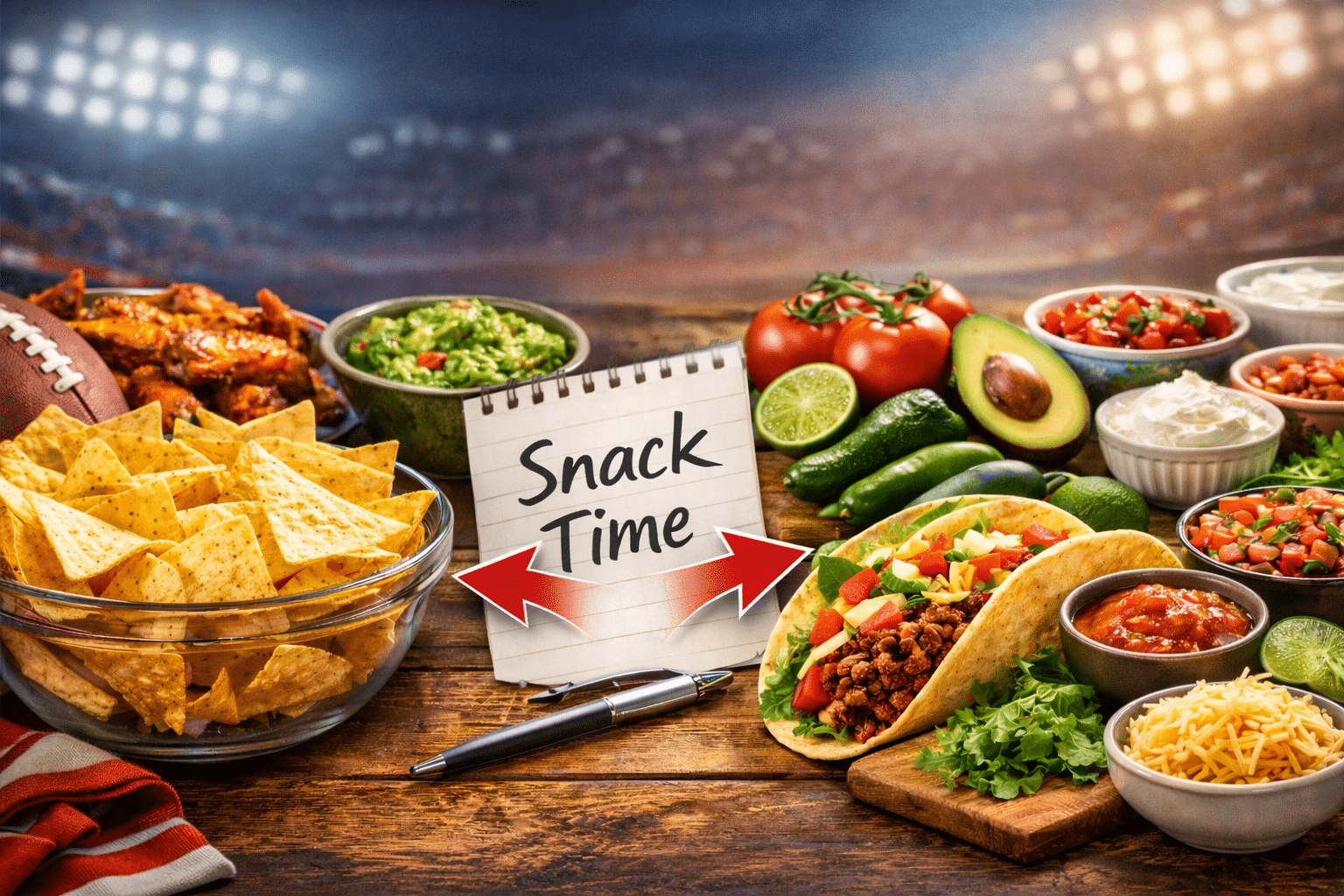
Super Bowl is the clearest example of the disconnect. Retail still treats it like a snack event driven by chips, soda, and beer, and that’s where most of the promotional focus sits.
But the basket tells a very different story. Across repeated digital orders, the dominant theme wasn’t junk food – it was meal building. Shoppers consistently bought avocados, limes, cilantro, tomatoes, jalapeños, queso, sour cream, shredded cheese, and organic ground beef. This wasn’t snacking behavior; it was taco bar construction at scale.
Even tortilla chips played a supporting role rather than acting as the centerpiece. And one of the clearest signals of real demand was what disappeared first. Mini sausages were consistently out of stock, reinforcing that shoppers were assembling full solutions – not browsing for deals. The shopper has already moved, but retail promotion planning hasn’t.
The Basket Reveals the Real Occasion
Retail is still built for products. Shoppers are building occasions while in-store promotions are still built around categories. That gap creates friction at the exact moment conversion should happen.
Valentine’s Day requires chocolate, flowers, wine, and dessert, yet those items sit in completely different parts of the store. Easter spreads proteins, sides, and brunch items across departments with little connection. Passover adds even more complexity, with kosher items fragmented across multiple sections.
Nothing is grouped, nothing is intuitive, and nothing is bundled. Instead of building a basket, the shopper is building a plan just to navigate the store. Every additional step increases the likelihood of a smaller or incomplete basket.
Out-of-Stocks and Promotions Are Breaking the Experience
Out-of-stocks are often treated as a supply issue, but they are really a basket issue. The items that go missing are rarely random – they are linchpins that hold the occasion together. When they disappear, the entire plan starts to break down. Cocktail weenies, challah bread, and pumpernickel bread consistently go out of stock during key occasions.
These items are not optional; they complete appetizers, meals, and traditions. When they’re missing, the shopper doesn’t just substitute – they have to rethink the entire experience.
That loss rarely shows up clearly in reporting. Retail tracks item-level performance, but the real impact is happening at the basket level. When the occasion breaks, the revenue tied to it disappears with it. Even when promotions drive volume, they often fail to drive profit. The default approach is to discount broadly and chase lift, assuming volume will compensate for lower margins. In reality, that strategy erodes profitability.
Occasion shopping behaves differently because it is mission-driven. Shoppers are focused on completion, not optimization, and they are far less price sensitive on critical items. When they need something to pull off an event, they will buy it.
This creates a clear opportunity. Not every item needs to be on promotion – most simply need to be visible, easy to find, and in stock.
Digital Shows the Blueprint – Retail Needs to Execute It
Digital grocery makes this behavior easier to see. Baskets are built around occasions, not aisles, and items are grouped by use case. Substitutions also protect the outcome, allowing shoppers to complete the occasion even when specific items are unavailable.
Retailers can capitalize on this by offering two paths: a pre-built basket based on budget, household size, and preferences, and a DIY option where shoppers can customize while staying anchored to the occasion.
The shift starts with a simple change in mindset: stop promoting items and start building the occasion. That means bundling products together in a way that reflects how shoppers actually use them. Pre-priced bundles are critical because they remove decision fatigue.
Shoppers value both time and money, and a single price simplifies the decision-making process. The retailers that focus on completion – who bundle the right items, execute effectively, and remove friction: will win.
Because the retailer that builds the basket… wins the occasion.
Check out this story for a play-by-play chart of how to win the upcoming Cinco de Mayo holiday…


