

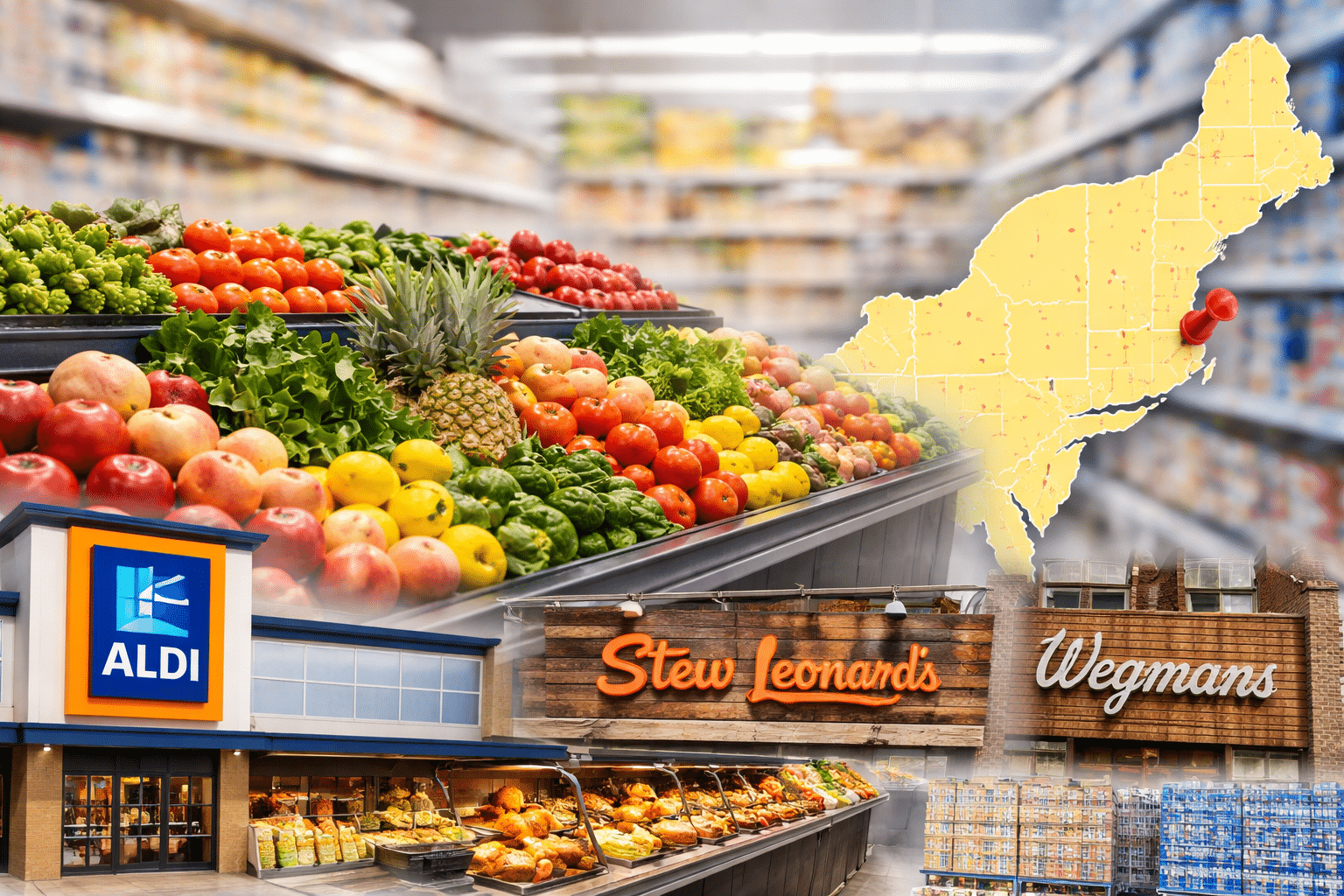
The Northeast grocery market is becoming increasingly polarized. Discount players are scaling aggressively, premium and experience-driven formats are doubling down on differentiation, and mid-tier operators are being forced into sharper, more disciplined decisions around stores, pricing and investment.
Against that backdrop, operators across the region are navigating intensifying price competition, evolving store formats and continued pressure on margins, all while trying to hold onto deeply entrenched customer bases they’ve held for decades in some cases.
Here are five developments worth watching across the Northeast grocery market this week.
Redner’s Unveils Discount “Cost Boss” Format in Baltimore
Redner’s Markets has launched a new discount banner, Cost Boss, converting an existing store in Baltimore into a no-frills, value-focused format. The concept leans into bulk buying, aggressive pricing and a simplified shopping experience aimed squarely at cost-conscious consumers.
The move stands in contrast to Redner’s Fresh Market stores, where the company has invested in perishables, prepared foods and a more elevated in-store experience. With Cost Boss, Redner’s is effectively operating three distinct formats under one umbrella, one oriented around value, one warehouse model, and another positioned around quality and service.
Here’s why it matters: This is a notable example of a smaller regional operator embracing a “K-shaped” strategy, splitting its business to serve diverging shopper priorities rather than trying to meet both with a single format. While large chains have long segmented banners, it’s far less common at Redner’s scale. If successful, it could signal a broader shift among mid-sized grocers toward sharper format differentiation as the middle of the market continues to erode.
Aldi’s Expansion Continues to Reshape the Competitive Map
Discount grocer Aldi is pressing ahead with an aggressive U.S. growth plan that includes opening more than 180 stores in 2026, with expansion reaching into new markets including Maine and continued densification across the Mid-Atlantic and Northeast. Reports indicate the company is targeting 3,200 U.S. locations by 2028 as part of its long-term growth strategy.
According to Axios, Aldi is also accelerating its conversion of legacy supermarket locations into its smaller-format stores, allowing it to enter established trade areas more quickly while keeping buildout costs relatively low. In many cases, Aldi is positioning new stores near high-traffic retail corridors or adjacent to strong-performing competitors.
Here’s why it matters: Aldi’s expansion isn’t just about store count; it’s steadily resetting price expectations as it goes along. As more Northeast shoppers are exposed to its model, traditional operators face increasing pressure to defend both margin and value perception.
Prepared Foods Remain a Battleground for Differentiation
A major renovation is underway at the Market Bistro concept store in Latham, N.Y., where Price Chopper/Market 32 is expanding prepared foods, updating service departments and enhancing its in-store dining experience, according to the local Times Union.
The investment reflects a broader trend among regional operators to reallocate space and capital toward fresh, ready-to-eat and foodservice-driven offerings. Industry coverage has highlighted similar moves across multiple chains, with expanded hot bars, made-to-order stations and seating areas designed to capture both meal solutions and incremental visits.
Here’s why it matters: While price remains critical, especially amid inflation fatigue, the Northeast continues to reward operators that win the “what’s for dinner tonight?” mission. Prepared foods and ready-to-eat offerings are increasingly central to that equation.
Even Top-Tier Operators Face Steep Competition in Dense Markets
In the latest development in a story we’ve been following since 2022, data that shows Wegmans’ Norwalk, Conn., store continues to trail nearby competitors such as Stew Leonard’s and ShopRite in foot traffic.
That performance gap highlights how deeply entrenched shopping patterns remain in many Northeast trading territories, where long-established operators benefit from decades of customer loyalty, convenience and routine-driven trips.
Here’s why it matters: The Northeast has been and will be one of the most competitive grocery environments in the country. Brand strength alone is not enough; breaking entrenched shopping habits requires time, localization and sustained investment.
Supply Chain Shifts Are Creating New Pressure for Independents
Changes in supplier and distribution models, including moves away from direct store delivery in major markets like New York City, are raising costs for independent grocers with reports indicating some retailers expecting per-item price increases tied to added distribution layers.
These shifts can introduce additional handling, transportation and margin layers, particularly in center-store categories, where pricing is already highly competitive. Retailers in dense urban markets may feel these effects most acutely.
Here’s why it matters: Independents are increasingly exposed to structural disadvantages in the supply chain. As costs rise and trade policy fluctuates, maintaining price competitiveness against larger chains becomes more difficult, widening the gap between scale players and smaller operators.


